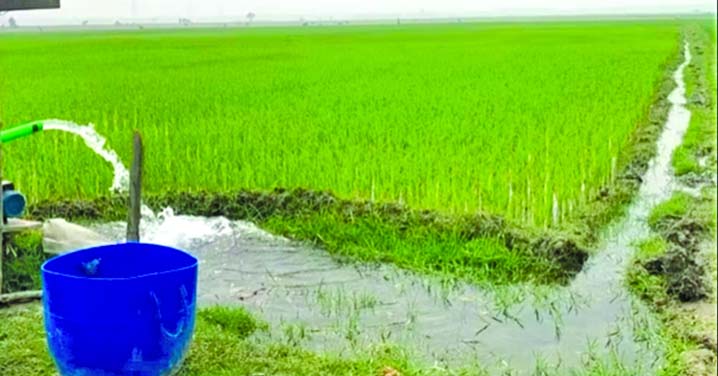
Bangladesh’s largest surface irrigation scheme, the Ganges-Kobadak (GK) Irrigation Project, has undertaken a major redesign of its pumping system to enable water withdrawal from the Padma River at lower water levels, amid concerns over dry-season flow reductions linked to upstream diversion.
Under the redesign, the project aims to reduce the minimum water level required at its intake channel from 3.9 metres to 2.5 metres, allowing pumps to remain operational even when river levels fall significantly during the lean season, Executive Engineer of the GK Project Pump House Mizanur Rahman told UNB.
The GK Project, which has a command area of 197,500 hectares and an irrigable area of about 95,500 hectares, was launched in 1962 and remains one of Bangladesh’s most important irrigation infrastructures supporting agricultural production in the southwest region.
Its coverage however over the years came down to 55,000 hectares as some pumps and canals became inoperable.
Dengue rings alarm amid measles crisis: Is Bangladesh prepared for another health emergency?
According to project officials, the pumping station faces operational disruptions whenever the water level in the Padma River falls below 4.5 metres.
The situation worsened after the commissioning of India’s Farakka Barrage in West Bengal in 1975, which significantly altered dry-season water flows in the river system.
Mizanur Rahman said the consequences became particularly evident in 2024 when irrigation activities under the project came to a complete halt because the pumping station could not lift water after the water level in the Padma River near Hardinge Bridge dropped below four metres.
SM/CitizenTimes