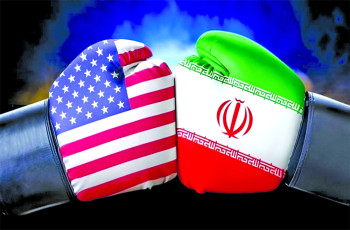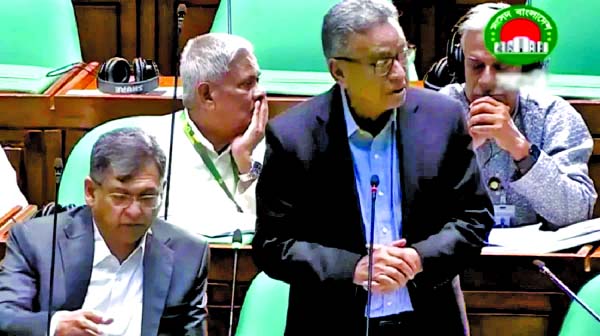
Finance Minister Amir Khosru Mahmud Chowdhury on Tuesday told Parliament that Bangladesh requires an additional subsidy of approximately Tk 42,600 crore for four sectors –oil, gas, electricity, and fertiliser— in the outgoing fiscal year of 2025-2026 due to the conflicts in the Middle East.
“Recent conflicts in the Middle East, including Iran, and the instability in the global energy market have put additional pressure on the (Bangladesh) government's subsidy spending in the oil, gas, electricity, and fertiliser sectors. According to preliminary estimates, the additional subsidy requirement in these four sectors alone is about Tk 42,600 crore by June in the 2025-26 Fiscal Year,” he said.
The finance minister said this, while responding to a starred question from ruling party lawmaker SM Jahangir Hossain (Dhaka-18) who asked to know whether Bangladesh incurred any economical or business loss due to the recent war in the middle east.
Of the additional amount of the subsidy, some Tk 10,258 crore may be required for oil, Tk 11,170 crore for gas, Tk 19,821 crore for electricity and Tk 1,350 crore for fertiliser, he said.
Amir Khosru said the Middle East conflict has posed both immediate and potential risks to the Bangladesh economy. “So far, the impact has been mainly visible in the areas of fuel, fertiliser, import costs, transport costs, inflation, foreign exchange management, remittances and foreign employment,” he said.
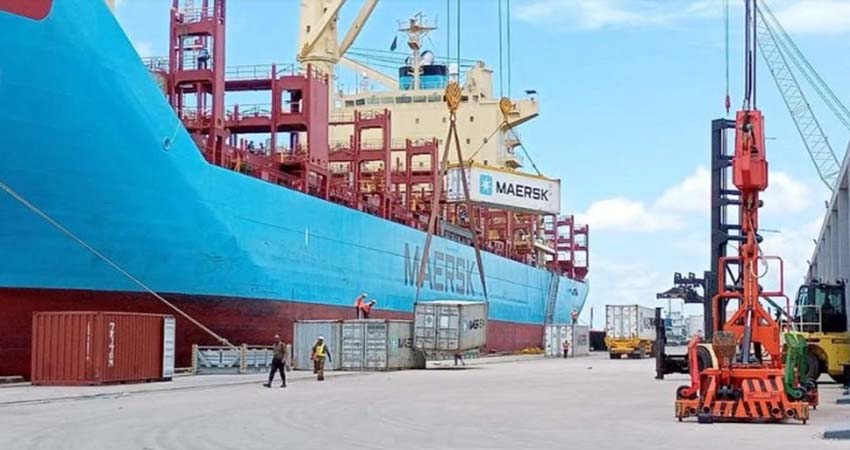
He said the increased prices of fuel oil, LNG and fertilisers in the international market have put pressure on import costs and production costs. The energy price-hike could increase costs in the electricity, transport, agriculture and industrial sectors, which can indirectly affect market prices and inflation.
As the Middle East is an important destination for Bangladeshi expatriate workers, the prolonged instability can also pose risks to foreign employment and remittance inflows, he said.
Noting that the government is closely monitoring the situation, the finance minister said a number of steps are being taken to address the current situation such as sources diversification for energy imports, exploring local gas, maintaining normal supply of essential goods, remaining cautious over foreign exchange management, and exploring alternative labour markets.
SM/CitizenTimes